You've probably used ChatGPT by now. Maybe you asked it to write an email, explain something confusing, or settle a debate at dinner.
But lately, you keep hearing about "AI Agents" and wondering: Is this just another buzzword? Or did I miss something important?
Let me save you 47 articles of tech jargon. Here's the difference in one sentence:
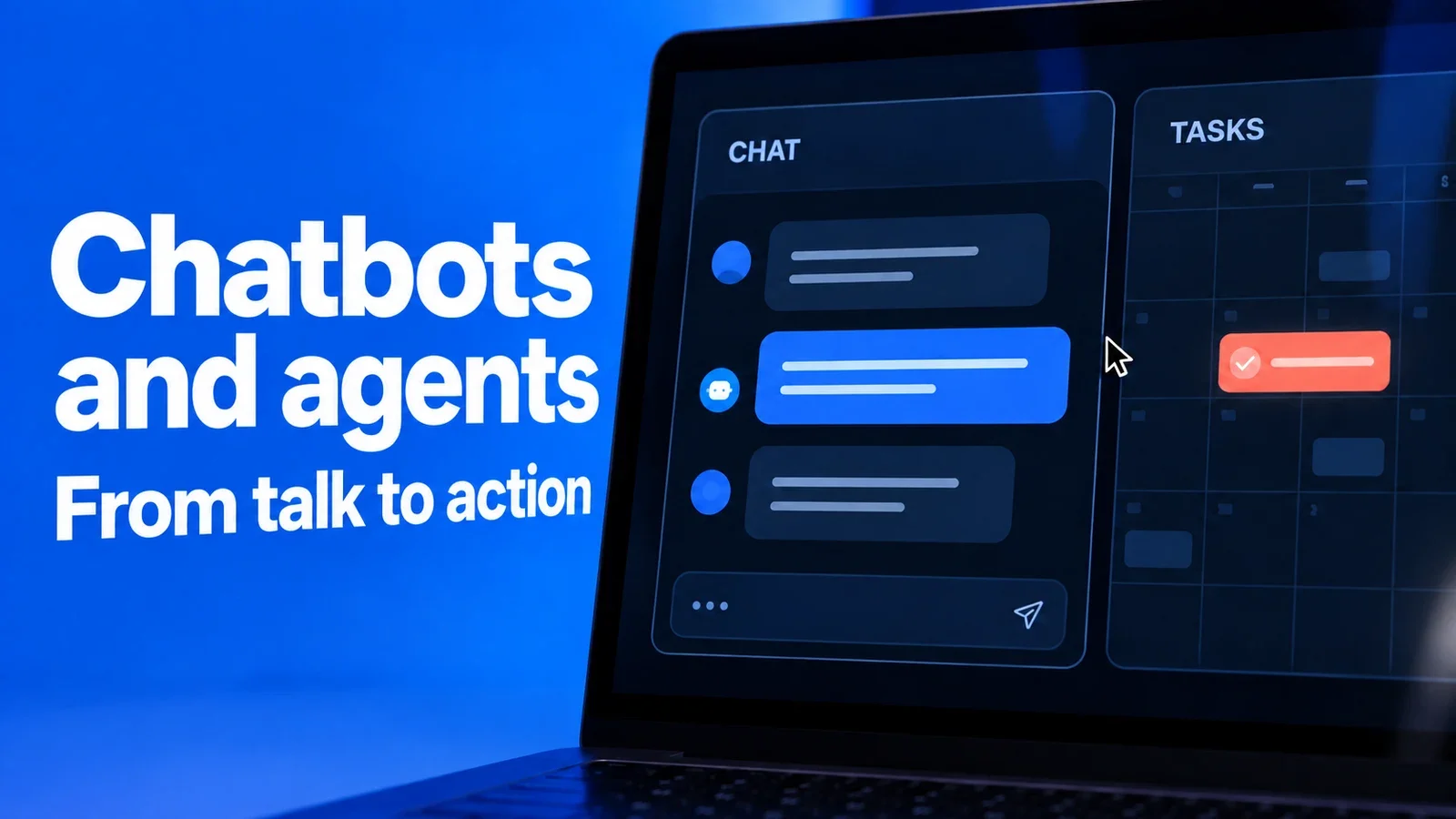
A chatbot is a conversational interface; an agent uses a model and tools to carry out steps towards a goal. A chatbot can also call tools, so the distinction is not simply “talking versus doing”. The consultant-and-assistant comparison below is a simplified analogy. In either case, the surrounding system defines permissions, checks and approvals. See the tool-calling workflow.
That's it. That's the revolution everyone's talking about.
The Consultant vs. The Assistant
Think of it like this:
A chatbot is like hiring a consultant. You ask a question, they give you a brilliant answer, and then... they leave. You still have to do all the work.
"Here's how you should book your trip to Tokyo." Great. Now you open 12 browser tabs and spend two hours comparing flights.
An AI agent is like having a personal assistant. You say what you need, and they actually go do it.
"Book me a flight to Tokyo, under $800, aisle seat." It can compare options and prepare the booking. A purchase should follow the permissions and approval process you have defined.
OWASP’s excessive-agency guidance explains why high-impact actions need appropriate human control.
Same AI brain. Completely different job description.
Why Should You Care?
Because we're moving from AI that writes to AI that works.
Right now, most people use AI to generate text—emails, summaries, ideas. Useful, sure. But you're still the one clicking buttons, copying, pasting, and executing.
Agents change that. They can:
- Send emails on your behalf
- Update your spreadsheets
- Schedule meetings
- Process invoices
- Connect different apps together
The AI stops being a fancy autocomplete and starts being an actual team member.
The Simple Breakdown
| Chatbot | AI Agent | |
|---|---|---|
| What it does | Answers questions | Completes tasks |
| Your responsibility | Check the answer and any requested action | Define permissions, review high-impact actions and verify results |
| Best metaphor | A consultant | A personal assistant |
| Example | "Here's how to cancel your subscription" | Actually cancels the subscription |
The Bottom Line
Next time someone drops "AI Agent" in conversation, you'll know exactly what they mean—and whether they actually know what they mean.
The shift from chatbots to agents isn't hype. It's the difference between AI that helps you think and AI that helps you get things done.
And honestly? That's when things get interesting.

Discussion
Comments
No published comments